Monday, October 19, 2026

My Top 25 Horror Stories October 2026

My Top 25 Horror Stories 
October 2026 
 
I've been reading horror stories since 1970, when I was 9 years old and I saw a copy of Alfred Hitchcock's Monster Museum (Random House, 1965) on the shelf of my grammar school library. 

While most of the stories in the book were rather tame - it was aimed at an audience of juvenile Baby Boomers, after all - Joseph Payne Brennan's story 'Slime' immediately gripped my attention, and from then on, my interest in the genre began, and has lasted since.

Every year now, for Autumn and 'Spooky Stories Season,' I provide a list of my 'Top 2x' horror short stories. The list grows with each passing year, and now stands at 25. These are stories that (in my humble opinion) are the better ones I've encountered in 56 years of reading all manner of horror fiction. For the 2026 list, I've changed one entry.
 
Since it's the interval covered by this blog, I've concentrated on stories that first saw print from the early 1960s into the mid-1990s. I've posted a brief synopses for each story, to jog memories and to give the reader a sense of what to expect.

One problem with focusing on such stories is that in many instances the books where they first appeared long are out of print, and copies in good condition have steep asking prices. Accordingly, where available, I've tried to provide alternate sources for obtaining these stories.

My Top 25, in chronological order:

The First Days of May, by Claude Veillot, The Magazine of Fantasy and Science Fiction, December 1961; Tales of Terror from Outer Space, 1975

‘Alien invasion’ theme, with some convincing bug-eyed monsters. A pdf copy is available here.

***
One of the Dead, by William Wood, The Saturday Evening Post, October 31, 1964; Alfred Hitchcock Presents: Scream Along with Me; A Walk with the Beast, 1969; Great American Ghost Stories, 1991

Although a bit overwritten, this is a well-crafted melding of the haunted house theme with the anomie of mid-1960s life in suburban Los Angeles.  

***
The Road to Mictlantecutli, by Adobe James, Adam Bedside Reader, 1965; The Sixth Pan Book of Horror Stories,1965; The Arbor House Treasury of Horror and the Supernatural, 1981

Morgan, a ruthless criminal, is travelling on a mysterious road in Mexico. The strange sights and passions he encounters will lead him to change his life........for good, or for ill.

'Adobe James' was the pseudonym of American writer James Moss Cardwell (1926 – 1990), who had his short stories published in a variety of magazines and anthologies during the 1960s, 1970s, and 1980s. 
***

Longtooth, by Edgar Pangborn, The Magazine of Fantasy and Science Fiction, January 1970; The Best of Modern Horror, 1989

A resident of rural Maine discovers something disturbing in the deep, dark woods. A pdf copy is available here.

***
Goat, by David Campton, New Writings in Horror and the Supernatural #1, 1971; Whispers: An Anthology of Fantasy and Horror, 1977

Creepy goings-on in an English village. A fine early example of what now is classified as 'folk horror.'
 
***

The Human Side of the Village Monster, by Edward Bryant, Universe 1, 1970; Among the Dead and Other Events Leading Up to the Apocalypse, 1973
 
Despite its cumbersome title, this is a well-composed tale about a near-future New York City ruined by overpopulation and Eco-Catastrophe. It seems to have a predictable denouement, but veers off into an unexpected, but unpleasant, direction.


***
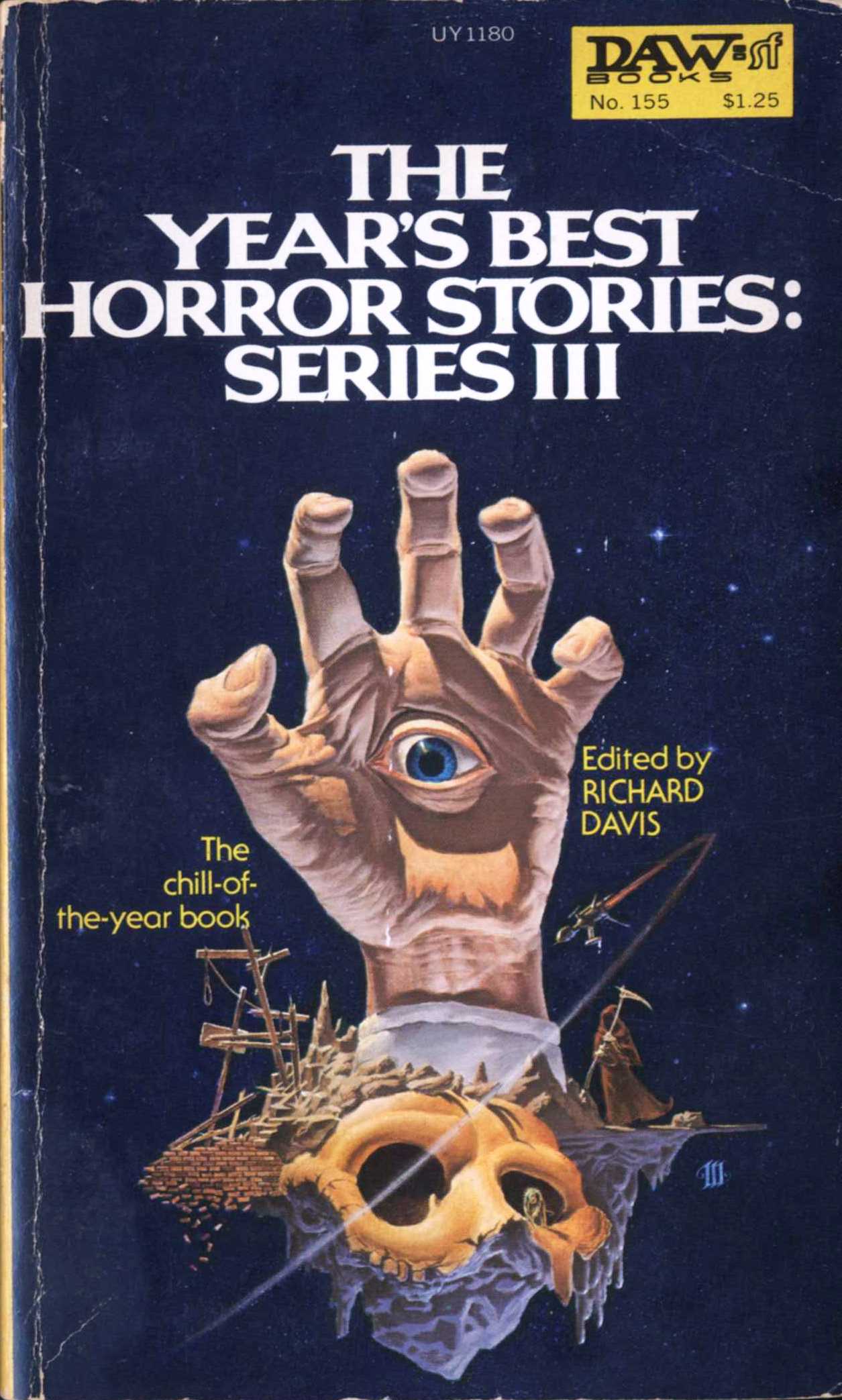
Satanesque, by Alan Weiss, The Literary Magazine of Fantasy and Terror, #6, 1974; The Year’s Best Horror Stories: Series III, 1975

Starts off on a thoroughly conventional note, then unexpectedly transitions into something entirely imaginative and offbeat.
 
***
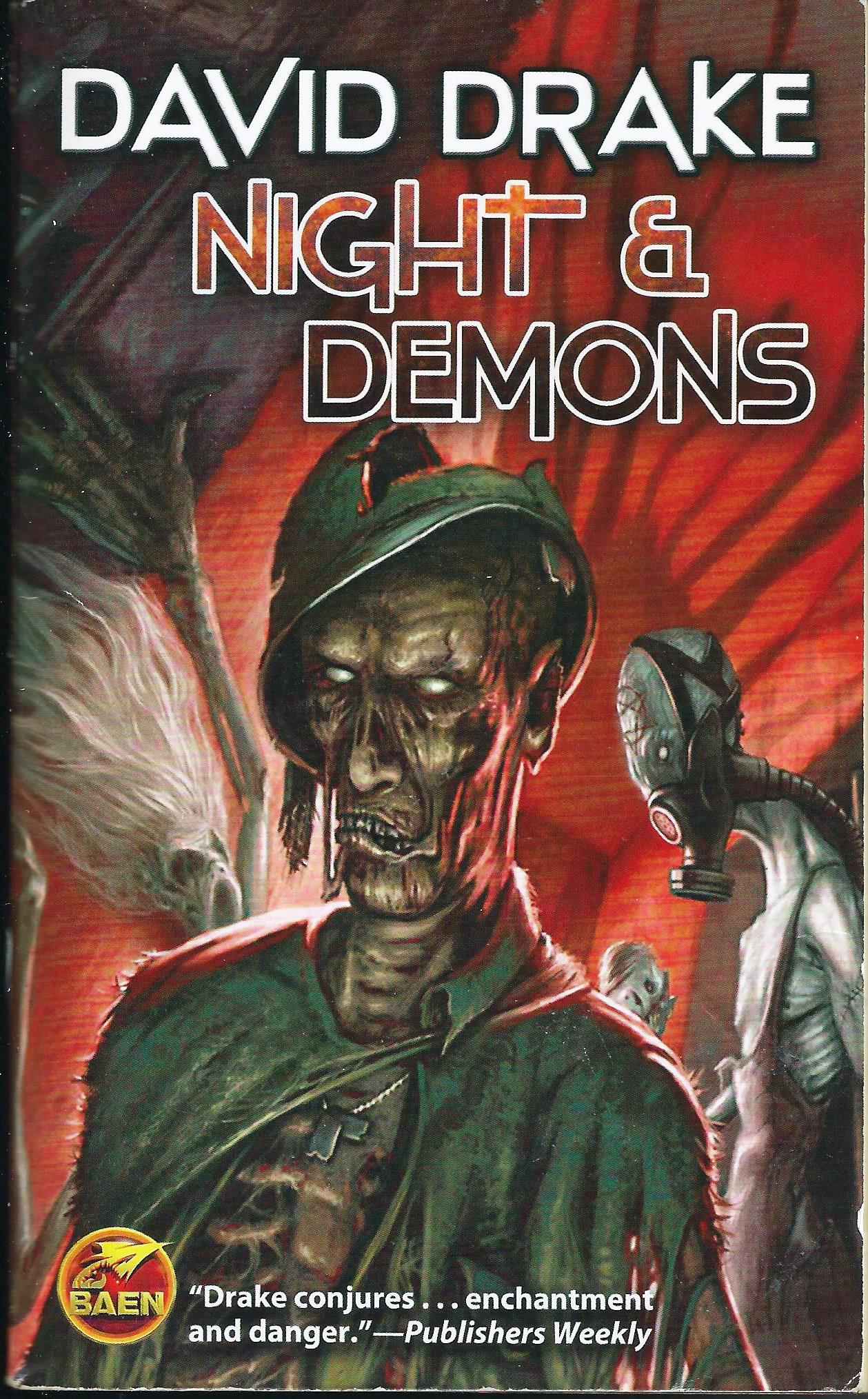
The Shortest Way, by David Drake, Whispers #3, March 1974; From the Heart of Darkness, 1983; Vettius and His Friends, 1989;  Night & Demons, 2012

A 'Vettius' story set in the days of the Roman empire. Our hero elects to travel on a road that the locals take care to avoid. An atmospheric, memorable tale.

***
The Taste of Your Love, by Eddy C. Bertin, The Year’s Best Horror Stories: Series III, 1975; The Whispering Horror, 2013

One of the better Serial Killer tales I’ve read.

***
The Changer of Names, by Ramsey Campbell, Swords Against Darkness II, 1977; The Year’s Best Fantasy Stories: 4, 1978; Far Away and Never, 2021

I've never been a fan of Campbell’s horror stories and novels, but his sword-and-sorcery stories featuring the ‘Ryre’ character are entertaining exercises in creepiness. There are metaphors and similes abounding in the Ryre tales, to be sure, but as compared to Campbell's horror stories the purple prose is reduced in scope, and plotting receives due consideration. 

While the Swords Against Darkness paperbacks have exorbitant asking prices, a new (October 2021) reprint of Far Away and Never from DMR Press collects all four of the Ryre stories, along with other fantasy tales from Campbell's early career.  

***
Long Hollow Swamp, by Joseph Payne Brennan, Alfred Hitchcock’s Mystery Magazine, January 1976; The Year’s Best Horror Stories: Series V, 1977

A great 'monsters-on-the-loose' tale from Brennan.

***
Sing A last Song of Valdese, by Karl Edward Wagner, Chacal #1, Winter 1976; The Year’s Best Horror Stories: Series V, 1977; Night Winds, 1978, 1983

One of two entries in this Top 25 list by Wagner, who wrote his share of duds, but when he was On, he was On. In a remote forest, a lone traveler comes upon an inn filled with sinister characters. A pdf copy is available here.

***
Window, by Bob Leman, The Magazine of Fantasy and Science Fiction, May 1980; The 1981 Annual World’s Best SF, 1981; The Best of Modern Horror, 1989

A neat mix of sci-fi and horror, revolving around a portal to another dimension. A pdf copy is available here.

***
Where the Summer Ends, by Karl Edward Wagner, Dark Forces, August 1980; In A Lonely Place, 1983; The American Fantasy Tradition, 2002
 
A second entry from Wagner. It’s hot, humid, and dangerous in 1970s Knoxville. Stay away from the kudzu !

***
The New Rays, by M. John Harrison, Interzone #1, Spring 1982, The Year’s Best Horror Stories: Series XI, 1983; The Weird: A Compendium of Strange and Dark Stories, 2012

A disturbing tale about disease and the desperate search for a cure, with proto-steampunk leanings. 

***

After-Images, by Malcolm John Edwards, Interzone #4, Spring 1983, The Year’s Best Horror Stories: Series XII, 1984; Interzone: The First Anthology, 1986

Another fine melding of sci-fi and horror, this time set in an English suburb. It’s too bad that Edwards, a playwright and editor, didn’t write more short stories. A pdf copy is available here.

***
The Man with Legs, by Al Sarrantonio, Shadows No. 6, October 1983, The Year’s Best Horror Stories: Series XII, 1984

Two kids learn some disturbing secrets about their family history.

***

High Tide, by Leanne Frahm, Fears, 1983

Frahm, an Australian writer, sets this novelette in the vicinity of the Newry Islands in coastal Queensland. A family camping trip to Mud Island discovers something strange is going on amidst the mangrove swamps: Eco-horror at its creepiest !
 
***

Red Christmas, by David Garnett, The Year's Best Horror Stories: Series XIV, 1986

What seems like a conventional Mad Slasher story has a neat little twist at the end.
 
                                                                        *** 

The Man Who Drowned Puppies, by Thomas Sullivan, Masques II, 1987, Dark Masques, 2001. 
 
His name is MacIver, and he alone is willing to do what other people won't. An extremely well-crafted story, with the right note of pathos. 
 

                                                                        *** 

Salvage Rites, by Ian Watson, The Magazine of Fantasy & Science Fiction, January 1987, The Best of Modern Horror, 1989
 
Tim and Rosy, an English couple of modest means, take a trip to the town dump…….which, they discover, has its problems. 

***
 
Mengele, by Lucius Shepard, Universe 15, 1985, The Jaguar Hunter, 1988

Troubling things are going on at an estate located in a remote region of Paraguay.


***

The Picknickers, by Brian Lumley, Final Shadows, 1991, The Year's Best Horror Stories: XX, 1992
 
Unsettling events are happening in the graveyard of a Welsh coal-mining village. Starts slow, but gradually unfolds into genuine creepiness.

***
Under the Crust, by Terry Lamsley (1993); The Mammoth Book of New Terror, 2004
 
Like Ian Watson's 'Salvage Rites,' above, this is another tale set in the confines of a UK rubbish dump ('tip'), this one, Dove Holes near Buxton (Brits seem to have a real talent for mingling landfills with horror themes). In 'Crust,' Maurice's encounter with some creepy habitues of Dove Holes eventually leads him into Lovecraftian territory. Atmospheric and imaginative.
 
Aftertaste, by John Shirley, Bones of the Children, 1996, Black Butterflies, 2001
 
The Zombie Apocalypse comes to the ghetto. A great tale from Shirley, mixing splatterpunk with irreverent humor.

Friday, October 16, 2026

At the library sale October 2026

At the Library Sale
October, 2026 
Earlier this month it was time again for the bi-annual library sale, always a great opportunity to find some vintage paperbacks. The 'members only' sale, held on Friday evening, is the best opportunity, but it's also very crowded: elbow to elbow. It was 92 degrees on Friday, and the building where the sale was being held was stifling. I brought a Sweat Towel with me, and used it regularly........
I made a return visit the following week, and saw a strange sight: a hijabi woman scanning the books, using some gadget on her right hand, coupled with a smartphone attached to her left wrist ?! Quite a setup.....most dealers / resellers just use their smartphone for scanning.
Along with a trip to the library sale in Cville, I also went to a sale at a smaller library south of the city. 
 
When all was said and done, I came away with some interesting selections. Probably the best of these was a copy of 'The Brains of Rats' by Michael Blumlein, an anthology which got high remarks ('excellent') from the Too Much Horror Fiction blog. Used copies of 'Brains' can go for $15 on up, so I was happy to get my copy for $2.
I also picked up some copies of Heavy Metal magazine from 2008 (the Library Lady who rang me up, pursed her lips at these), a Bill Pronzini 'Werewolf' anthology, and some 1970s potboilers.
All of these for less than $45. Like I say, you never know just what you'll find, at the Library Sale...........!

Monday, October 12, 2026

Book Review: Dark Masques

Book Review: 'Dark Masques' edited by J. N. Williamson
3 / 5 Stars 
 
'Dark Masques' (508 pp.) was published by Pinnacle Books in 2001. The cover artist is uncredited.
 
The 'Masques' franchise was one of the more high-profile horror anthologies issued in the Paperbacks from Hell era. Originally published in hardcover by small press publisher John Maclay in October 1984, the first volume was successful enough for Williamson to edit and published 'Masques II' in 1987. Both collections subsequently were reprinted in various paperback editions, such as 'The Best of Masques' (Berkeley, 1988). A 2011 deluxe hardcover edition, 'J.N. Williamson's Illustrated Masques,' consists of only 52 copies and is expensive to acquire.
 
Williamson issued two additional volumes in the series, 'Masques III' in 1989, with 'Masques IV' following in 1991. 
 
(You can get Masques from the Internet Archive, too) 
 
The Pinnacle Books paperback editions contain between them all of the content from Masques and Masques II: 46 short stories and poems. 
I'm skeptical about a lot of these Paperbacks from Hell short story collections because many of the contributors phoned in their entries, stuff that was extracted from their personal slush piles and submitted because, well, they'd been invited to contribute and it was not good to refuse..... 

So how does 'Dark Masques' stack up ? Here are my capsule summaries of the contents:
 
Nightcrawlers, by Robert R. McCammon: it's a dark and stormy night at Big Bob's gas station and diner in rural Alabama. Things get complicated when a disheveled drifter enters the place......Vietnam veterans and Post-traumatic Stress Disorder were major tropes in the 1980s, and McCammon works those themes reasonably well into this tale. 

Somebody Like You, by Dennis Etchison: aghhhh.......typical Etchison. A thin plot involving a sibylline woman who makes Enigmatic Remarks; a narrative comprised entirely of vapid dialogue; and an atmosphere that is banal, rather than disturbing. 
 
Third Wind, by Richard Christian Matheson: Michael, a self-centered 80s yuppie, is intent on running 50 miles (?!). En route, some unsettling things happen. A phoned-in entry from Matheson.

Redbeard, by Gene Wolfe: an older man.........his young wife......a remote farmhouse......in the basement, a locked door that she never must open........one of Wolfe's more accessible stories, with a twist ending.
 
The Turn of Time, by David B. Silva: en elderly man visits the house where he grew up, now an abandoned structure. The man sees visions, with these having implications for the family line. As the story progresses, things take a very strange turn. This story has an interesting premise, but is too overwritten to be very impactful.
 
Soft, by F. Paul Wilson: the first-person narrator and his daughter are among the few survivors of a new epidemic, one that afflicts people in bizarre fashion. This story is an early manifestation of what would come to be known as 'body horror,' and it's one of the best stories in 'Dark Masques.'
 
House Mothers, by J. N. Williamson: when her boyfriend Barry tries to get too gropey in the front seat of his Buick, Pamela breaks free and runs into the nearby woods. She stumbles across what might be a haunted house. This is a feeble entry from editor Williamson, with fanfic-quality prose: She became aware then of moonlight groping at the solitary window pane in the living room.........
 
Party Time, by Mort Castle: a three-page treatment of the 'mutant child housed in the basement' theme. And it works !
 
Everybody Needs a Little Love, by Robert Bloch: embittered by a recent divorce, David Curtis decides to seek new love from an unusual source. A decent tale from Bloch.
 
Down by the Sea Near the Great Big Rock, by Joe R. Lansdale: early Lansdale. People are moved to sudden acts of violence. No splatterpunk, but a surprise ending.
 
The First Day of Spring, by David Knoles: Barry Locke is about to get married, but the joyful day is complicated by ill-health on his part. This story tries to create a facetious 'creature feature' sensibility, but comes across as contrived and cutesy.
 
Czadek, by Ray Russell: plodding tale of an egomaniacal actor whose career stalls, and ultimately implodes, in bizarre fashion. It's more of a dark fantasy piece than a horror piece.
 
The Old Men Know, by Charles L. Grant: it's November, and Atmospheric. Dead leaves piling on the ground, overcast skies, chilly temperatures, a sense of loss, personal alienation, an awareness of the end of things, imminent darkness, etcetra, etcetra, etcetra. You know how Grant is..........
 
The first-person narrator is a children's book illustrator whose relationship with his live-in girlfriend is fraying. He increasingly spends time conversing with a group of elderly men who congregate in the local park. Some Vaguely Spooky things happen. The ending has a tacked-on quality. 
 
The Substitute, by Gahan Wilson: the sixth grade at Washington School has a substitute teacher, Miss Or. She is a strange woman, who comes from someplace very, very different from what the kids are used. to. An imaginative, entertaining tale from Wilson.
 
The Alteration, by Dennis Hamilton: Harry Crawley does odious things at the El Lobo bar in Puerto Valencia. His partners in crime, greasy Mexicans all, dislike Harry as much as he dislikes them, but money is money and trumps dislikes. But that's about to change..........an effective story, with a splatterpunk sensibility, from author Hamilton. Another of the better entries in the anthology.
 
Trust Not a Man, by William F. Nolan: Elise Malcolm is young, beautiful, unmarried, and longing for a 'quality' man. On a visit to a singles bar she meets a guy who could be The One ? I suspect most readers will see where this story is going well before the denouement.
 
My Grandmother's Japonicas, by Charles Beaumont: an 'unpublished' fragment, possibly of a planned novel, from Beaumont (aka Charles Leroy Nutt, who died in 1967 at age 38). It's an 'Adams Family' mixture of mild horror and humor. There are accompanying encomiums ('A Short, Incandescent Life,' and 'Charles Beaumont: The Magic Man,' from Ray Russell and William Nolan, respectively). 
 
I had to wonder why editor Williamson included this slight piece, when there were more deserving potential (Splatterpunk) contributors out in the world......
 
Popsy, by Stephen King: Briggs Sheridan likes to hang out at the Cousintown Mall. He's looking for lost children, for nefarious reasons. A good story from King !
 
Second Sight, by Ramsey Campbell: a middle-aged man named Key takes up residence in a new flat, but finds himself troubled by scratching noises, noises coming from the flooring. Is he imagining things ? One of those Campbell stories where you're not sure if the supernatural is 'real,' or just a manifestation of somebody's mental instability. I was underwhelmed.
 
The Yard, by William F. Nolan: in the Midwest town of Riverton, there is a junkyard, a sinister place that the kids and adults both avoid. An imaginative tale and one of the better ones in 'Dark Masques.'
 
The New Season, by Robert Bloch: Harry Hoaker, an emcee for a late night talk show, experiences some troubling phenomena. A dull, phoned-in entry from Bloch.
 
The Near Departed, by Richard Matheson: three-page short with a 'Twilight Zone' sensibility.
 
Ice Sculptures, by David B. Silva: Stairway to Heaven is a montane artist's commune, lying on the bottom slopes of Eagle Peak. One of the members of the commune can produce some unusual, if disturbing, artwork........the premise is interesting, but the prose, badly overwritten.
 
Wiping the Slate Clean, by G. Wayne Miller: the first-person narrator has a girlfriend who comes into and out of his life. Although she's very disruptive, he can't say no to her. George R. R. Martin did this psychological horror theme better, with his 1981 story 'Remembering Melody.'
 
The Litter, by James Kisner: author Kisner wrote a number of Paperbacks from Hell in the 1980s and 1990s for publishers like Pinnacle, Leisure, and Zebra. This tale is about a white, suburban, progressive All-American family that has a nice little cat named Harriet. Harriet is expecting; should the children be allowed to witness the Miracle of Birth ? Suburban horror, very well done. 
 
Splatter, by Douglas E. Winter: not a short story, but a series of vignettes that make allusions to horror in various media during the 1970s and 1980s (Dawn of the Dead, 'The Keep,' The Last House on the Left, etc.). This has something to do with efforts by politicians to censor horror content. This entry is a real dud......   
 
American Gothic, by Ray Russell: Ray Russell meets Erskine Caldwell in this grotesquerie featuring some inbred country boys, and a well-built young lady who is easy with her favors. There is a horror note introduced in the closing sentences.
 
Moist Dreams, by Stanley Wiater: a water bed (very 80s), and disturbing dreams that one hopes don't come true.....
 
Nothing from Nothing Comes, by Katherine Ramsland: Dr. Alan Kensey, a psychiatrist, discovers that a female patient at the asylum may be from the future. Overly melodramatic prose and a weak plot make this story one of least impressive in the anthology.
  
Maurice and Mog, by James Herbert: the master of British splatterpunk makes it into an American horror anthology ! Here, Maurice is a fallout shelter dweller who discovers that a cat (Mog) with a bad attitude, has managed to sneak inside. A decent story from Herbert.
 
Fish Story, by Dennis Hamilton: avid angler Morris Hooke learns that Fowler's Crescent, a lake in an isolated corner of Indiana, has some unusually big fish in it. The old-timers at Feer's Stock and Bait are a bit unwilling to impart their fishing knowledge to a stranger. Particularly knowledge about the effects a massive chemical spill has had on the lake fauna........a great eco-horror tale, and another of the better stories in 'Dark Masques.'
 
Outsteppin' Fetchit, by Charles R. Saunders: the author of the 'Imaro' sword and sorcery novels tells the tale of Peanut Posey, star of old-time black-and-white films in the prewar era.  Despite his small stature and Bojangles sensibility, Peanut had a fine time with the ladies. And those fine times, have a price.....a nice story from Saunders, one that had me wishing Paperbacks from Hell anthologists had been more diligent in soliciting stories from him, as opposed to any number of 'regulars'..........  
 
In the Tank, by Ardath Mayhar: it's a cold winter's night and Shag the wino (errr, Shag the Unhoused Person) is looking for refuge. Can he find it in the Halesburg Memorial Park....?!
 
Hidey Hole, by Steve Rasnic Tem: Jennifer isn't all that thrilled to be living in a new house, with a new stepfather and bratty stepbrother Robert. But the foundation of the house has a gap in its brickwork, and inside that gap is a hiding place with a strange allure. Maybe Robert can investigate ?
 
The Night is Freezing Fast, by Thomas F. Monteleone: Grandma's out of shortnin' for her baking, so even though it's a cold and snowy day in rural Iowa, Alan and Grandpa set out in their SUV for the store. En route, they pick up a hitchhiker; a man with disturbing mannerisms. I suspect most readers will guess early on where this story is going, but it's effective in its evocation of the bleak and isolated nature of the rural Midwest in winter.
 
Buried Talents, by Richard Matheson: have you ever wanted to read a story where those small-town traveling carnivals and their rigged games of chance get their comeuppance ? Well, 'Buried Talents' is for you !!!!
 
Lake George in High August, by John Robert Bensink: the Felder family has a nice cottage on the shore of Lake George in the Adirondacks. Taking a swim in the cool waters of the Lake is their first priority. This tale, which posits a 'road not taken' sensibility, is too confusingly plotted to be effective.

Wordsong, by J. N. Williamson: stilted prose dominates this tale of an anthology editor whose most valued contributor is the mysterious 'Wordsong.' The editor decides to track down Wordsong and meet him or her in person. There is an inconclusive ending.
 
The Man Who Drowned Puppies, by Thomas Sullivan: MacIver is the man's name, and he alone is willing to do what other people won't. Extremely well-crafted, and the best story in 'Dark Masques.' 
 
The Boy Who Came Back from the Dead, by Alan Rogers: the boy's name is Walt Fulton, and at age 8, he was run over by a car. Now Walt has indeed come back from the grave, whole and healthy. He claims his resurrection was mediated by space aliens ?! This story reads like something Joe R. Lansdale would've written (think 'Bob the Dinosaur Goes to Disneyland') and its horror content is negligible.
  
Then we have some prose poems and blank verse poems, contributed by Ardath Mayhar, Jessica Amanda Salmonson, Ray Bradbury, Mort Castle, and Joe R. Lansdale, that aren't especially memorable.
 
The verdict ? 'Dark Masques' has a sufficient number of quality contributions to earn a Three Star Rating. I can't call this book a must-have anthology, but if you're a diehard fan of Paperbacks from Hell and an avid collector, then this volume may be worth purchasing.  

Friday, October 9, 2026

Two Good Horror Anthologies from DAW Books: 1976 / 1977

Two Good Horror Anthologies from DAW Books: 1976 / 1977
Time for a nostalgia trip: hard to believe that fifty (!) years ago, I went to Gordon's Cigar shop and picked up these two high-quality DAW horror anthologies, each for my precious dollar-fifty (I was sixteen years old, and had a modest disposable income).
 
Nowadays you can go to amazon and with a Search for 'horror anthologies books,' call up over a hundred entries . These books can be delivered to your address within a few days. Amazing ! 
 
Back in the mid-70s paperback horror anthologies were quite rare; DAW book's 'The Year's Best' franchise was pretty much the only game in town, aside from the Alfred Hitchcock anthologies. While there was a surge in horror magazine publishing starting in the seventies, led by semi-professional periodicals such as Whispers, newsstand distribution of these titles was spotty at best and you had to find a specialty shop, or risk snail-mail ordering, if you wanted copies.
 
'The Disciples of Cthulhu,' released with apt timing in October, 1976, featured 'Where Yidhra Walks' by Walter C. DeBill, Jr.; ‘The Feaster from Afar’ by Joseph Payne Brennan; ‘Darkness, My Name Is’ by Eddy C. Bertin; and ‘The Fairground Horror’ by Brian Lumley.

'The Year's Best Horror Stories: Series V' (July 1977) contained a number of quality entries, including 'Long Hollow Swamp' from Brennan; Karl Edward Wagner’s ‘Sing A Last Song of Valdese;’ Manly Wade Wellman’s ‘Where the Woodbine Twineth;’ Arthur Byron Cover’s ‘The Day It Rained Lizards;’ and H. Warner Munn’s ‘The Well.’
 
If you can find copies of these two volumes for under $20, by all means, grab them ! I note that on eBay, someone recently had the entire set (23 volumes) of 'mint condition' DAW 'Year's Best Horror Stories,' for sale for $800..........

Tuesday, October 6, 2026

Playboy October 1973

Playboy 
October 1973
October, 1973, one of the most momentous months in the entire decade of the 1970s. I was 13 and the beginning of the month was unremarkable, just Fall coming into focus as it always did at that time of the year.
 
Atop the Billboard 200 album chart was Goat's Head Soup by the Stones. Leading the Top 40 singles was Cher, with 'Half Breed.'  

Looking at the Cashbox Hot 100 for the middle of the month, at the lower reaches there are all sorts of overlooked little gems......like 'Outlaw Man' by the Eagles, sitting at number 49. A great rock n roll number !

The mellow mood of October began to change with the start of the Yom Kippur War on October 6, and the increasing threats by OPEC to leverage oil exports to the West as a political weapon.

On October 19, angry that Nixon had sent massive amounts of military and financial aid to Israel, and worried that the Israelis were going to invade Syria and Egypt, King Faisal bin Abdulaziz Al Saud of Saudi Arabia implemented an oil embargo on the U.S. The effect was catastrophic for a nation that was unaware of its reliance on oil imports. The economic shock of the embargo would resonate throughout the decade.....

For now, though, let's pretend it's the second week of the month and no crisis is in the offing. Let's open up the latest issue of Playboy, with centerfold Valerie Lane posing on the cover. 

There's a spicy pictorial of American Indian actress and activist Sacheen Littlefeather, aka Maria Louise Cruz. After her death in October, 2022, Little feather's family revealed she had no Indian ancestry. But for that magical early October of 1973, she was a 'legitimate' Native American.

For a fiction piece, we have another of Robert Sheckley's many contributions to the magazine, a short story titled 'Voices,' featuring a middle-aged, paunchy, secretive accountant named Mr. West. Mr. West begins hearing a voice in his head; they seem to know a lot. Initially skeptical, West discovers that following the recommendations of the voice is an invaluable aid in business. 

There is a creepy, sleazy note to the story, involving West's niece, but that's how things were 50 years ago. 'Voices' does have a great illustration by Dan Morrill.

One of the men profiled in 'On the Scene' is an up-and-coming Country and Western artist named Waylon Jennings.  

Playboy's History of Organized Crime has another installment, this one about the New York City mob during Prohibition. It's rather dull.

Considerably more rewarding is the pictorial of Ms Lane, a hair stylist at 'Mr. Ron's' salon in Newport Beach.
The Air Force, like all military services, was struggling to attract recruits. Perhaps the promise of working with computers - and tape drives and punch cards - would aid recruitment ?
Morton Hunt provides an article on 'Sexual Behavior in the 1970s,' an opportunity for Playboy readers to see who was doing what, as compared to their own erotic behaviors. This type of 'survey research' always is suspect, so I'll simply provide the graphs, without comment.
And so we end our little sojourn, fifty-three years into the past, and bask in that Autumn glow, when gas was 36 cents a gallon, when an LP record cost $5, and when soft-focus redheads looked alluring........